

Knee sleeves only work when they fit. Too loose and they slide down halfway through your warm-up. Too tight and you'll spend five minutes fighting to get them on, then lose feeling in your shins. The good news: getting the size right takes two measurements and about a minute.
This guide covers how to measure, our size chart, how tight knee sleeves should be, and what to do if you land between sizes.
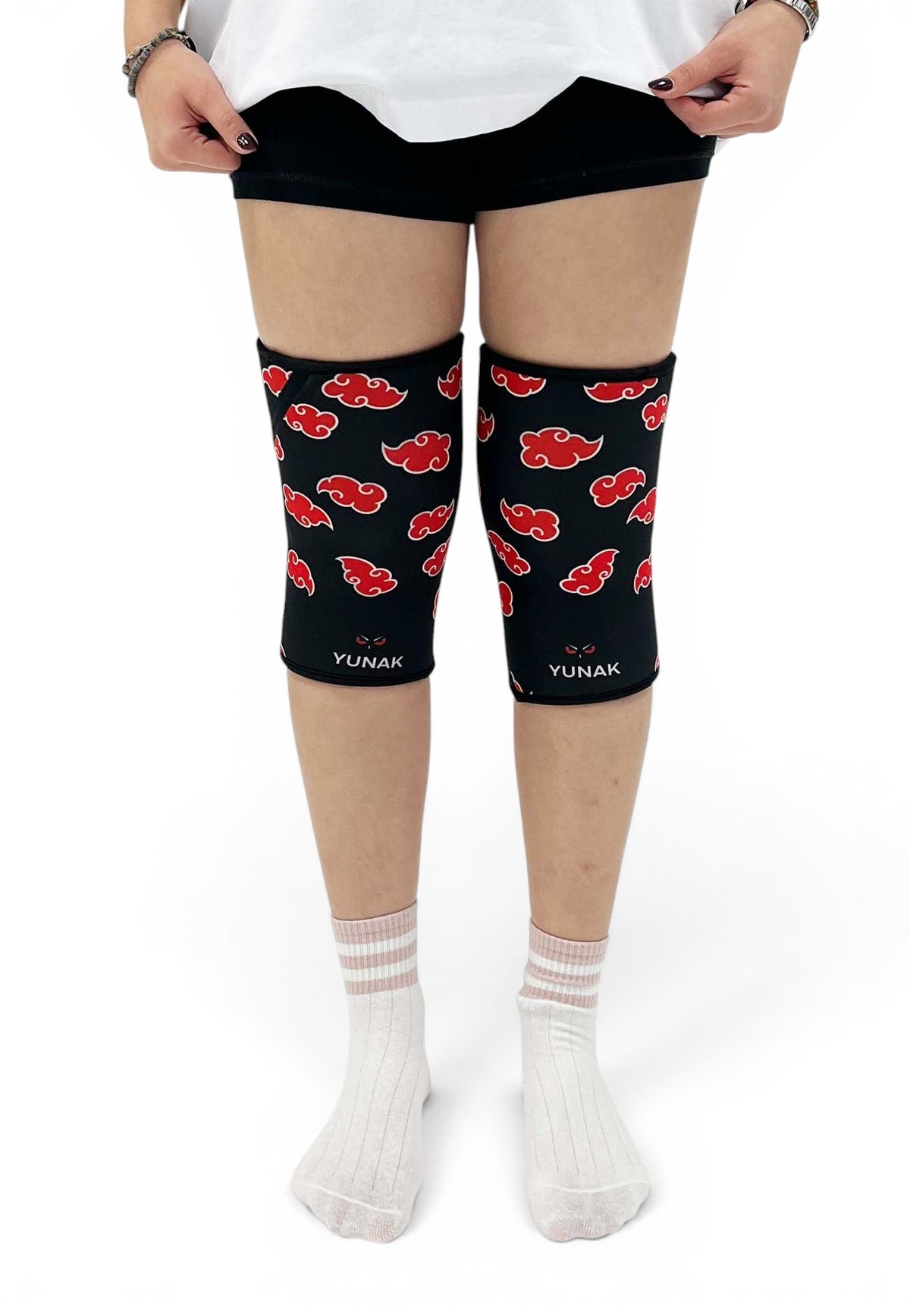
Step 1: Measure your leg
Use a soft tape measure and stand straight with your legs relaxed. Don't flex.
- Under the knee: measure around your calf 15 cm (6 in) below the centre of your knee joint.
- Over the knee: measure around your thigh 15 cm (6 in) above the centre of your knee joint.
Write both numbers down. Measure both legs if you can: most people have one leg slightly bigger, and you should size for the bigger one.
Step 2: Find your size
Compare your measurements with the chart. Each number is the leg circumference the size is made for.
| Size | Under the knee | Over the knee |
|---|---|---|
| S | 27.5 cm (10.8 in) | 34.5 cm (13.6 in) |
| M | 30 cm (11.8 in) | 37 cm (14.6 in) |
| L | 32.5 cm (12.8 in) | 39.5 cm (15.6 in) |
| XL | 35 cm (13.8 in) | 42 cm (16.5 in) |
| 2XL | 37.5 cm (14.8 in) | 44.5 cm (17.5 in) |
| 3XL | 40 cm (15.7 in) | 47 cm (18.5 in) |
If both of your measurements point to the same size, you're done. If they point to different sizes, go by the under-the-knee number. This is the most important part of the fit: the sleeve has to sit snug, or even tight, around the top of your calf. If it's loose there, it slides down and can't support the knee properly. Choose the size whose under-the-knee measurement matches yours or is slightly smaller.
Step 3: Decide how tight you want them
There's no single "right" fit. It depends on what you use them for.
- True to size: snug, moderate compression. Easy to pull on, comfortable for a whole session. Best for everyday training, high-rep leg days, Olympic lifts and anyone who wants warmth and support without a fight.
- One size down: tight, maximum support. Harder to get on, but you feel more rebound out of the bottom of a squat. Best for heavy singles and doubles, competition-style training and lifters who are used to tight sleeves.
If this is your first pair, start true to size. Tight sleeves are a preference you grow into, and a pair you can't get on doesn't help anyone.
Between two sizes?
Let the under-the-knee measurement decide, and take the smaller size. A sleeve that's snug or tight around the calf stays in place and supports the knee. A loose one slides down and does very little, however comfortable it feels.
Still unsure? Email support@yunak.shop with both measurements and what you train, and we'll tell you which size we'd pick. If your legs fall outside the chart, ask us about a custom size.
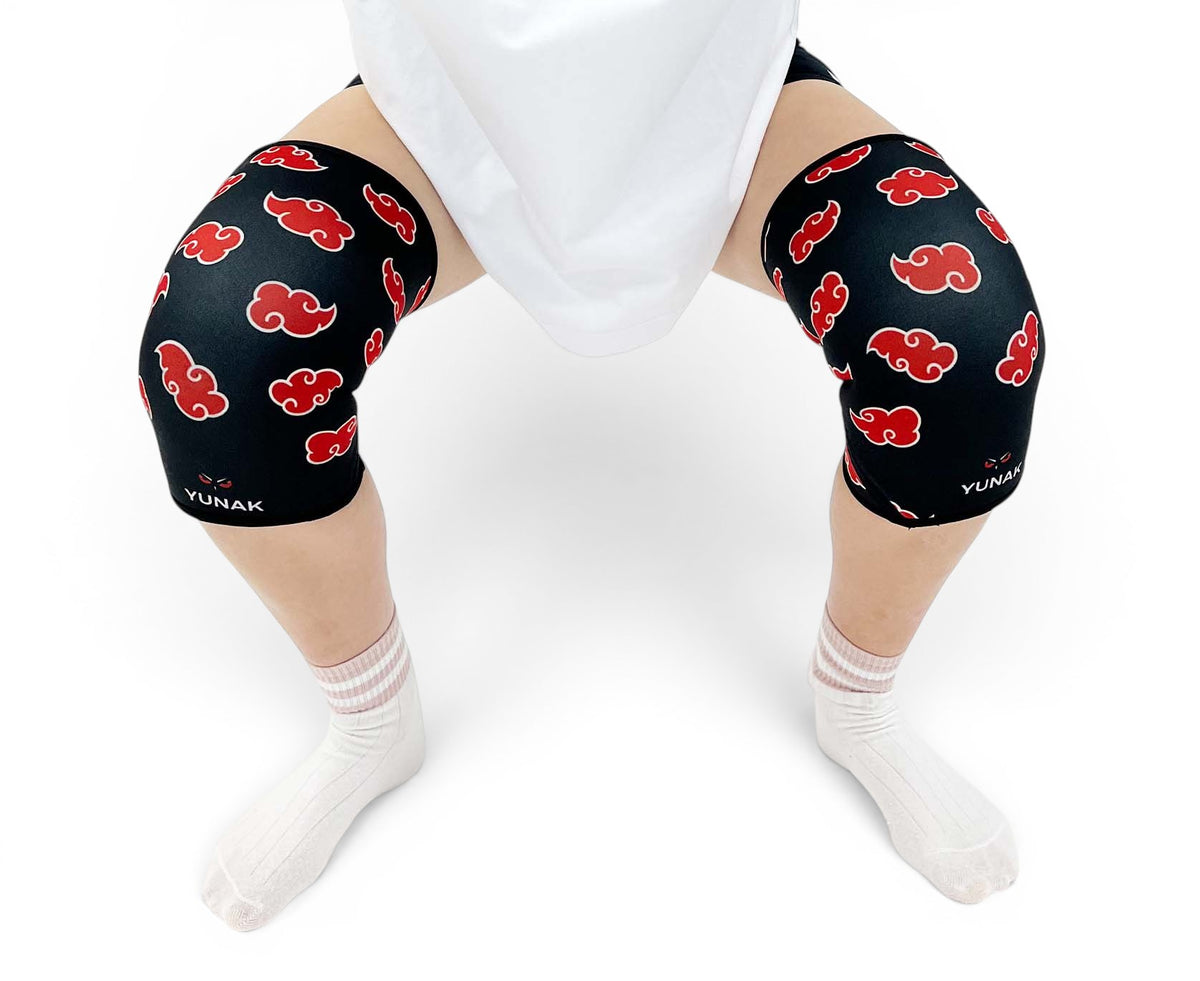
How a knee sleeve should feel
A good fit feels firm all the way around the knee, with no gaps, and stays in place through a full squat without rolling down. You should be able to bend your knee fully and walk normally.
Signs they're too big: they slide down during the set, wrinkle behind the knee or twist around your leg. Signs they're too small: you can't pull them past your calf, your feet tingle, or there's a deep red mark when you take them off after a few minutes.
How to put on tight knee sleeves
- Sit down. It's much easier than standing on one leg.
- Turn the sleeve inside out halfway, or fold the top half down over the bottom half.
- Pull the bottom part over your foot and up to your calf.
- Unfold the top half up over your knee.
- Centre it: the middle of the sleeve should sit on the middle of your kneecap, with roughly equal length above and below.
A plastic bag over your foot helps the sleeve slide past your heel if they're really tight.
About our knee sleeves
Every pair of Yunak knee sleeves is 7 mm neoprene and 30 cm (11.8 in) long, the maximum thickness and length allowed under IPF rules, with four-way stretch for even compression. They're sold as a pair, in sizes S to 3XL, each with its own anime-inspired print.
FAQ
Should knee sleeves be tight?
Snug, yes, especially around the calf. Painful, no. For training, a snug fit you can put on in under a minute is right for most people. Lifters who want maximum rebound in heavy squats often go one size down.
Are 7 mm knee sleeves allowed in powerlifting?
7 mm thickness and 30 cm length are the IPF's limits for knee sleeves. For sanctioned meets, federations also keep a list of approved brands, so check with your federation before competing.
Knee sleeves or knee wraps?
Sleeves keep your knees warm and supported and work for every leg exercise. Wraps are wound very tight for maximum rebound on heavy squats and are only used for a few sets. Most lifters train in sleeves.
Can I return knee sleeves if they don't fit?
Yes, standard sizes can be returned unused within 30 days. See our Refund Policy. Custom sizes can't be returned.
Ready to pick yours? Shop knee sleeves →